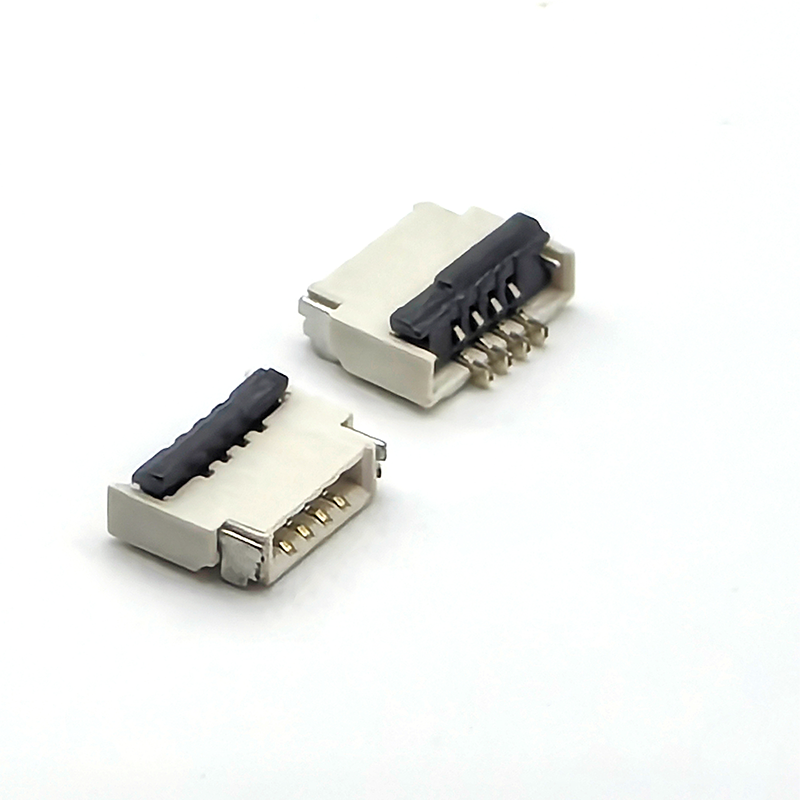
1. Structural Difference
The top-entry FPC connector features a design where the socket is separate from the upper contacts. The flat cable is inserted from the top and pressed into a slot, causing the FPC to lie flush against the connector's upper surface. This design requires careful control of the connector's height. In contrast, the bottom-entry FPC connector has a socket separate from the lower contacts. The FPC is inserted from the bottom into a receptacle, with the cable extending downward from the connector after mating.
2. Application Scenario
The top-entry FPC connector is typically specified in applications with strict height limitations, such as laptops and other slim devices. The bottom-entry FPC connector sees broader use and can be found in various electronic component applications, including smartphones, digital cameras, TVs, and audio equipment.
3. Advantages and Disadvantages
The top-entry FPC connector offers a thinner profile, making it ideal for height-constrained spaces. It also generally provides reliable mating performance, though it requires precise insertion to ensure proper connection and imposes specific height requirements. The bottom-entry FPC connector can accommodate thicker flexible cables and allows for a greater overall connector thickness. Its insertion process is more straightforward, and its design is not as sensitive to height restrictions.